0.6
air changes / hour (blower door)
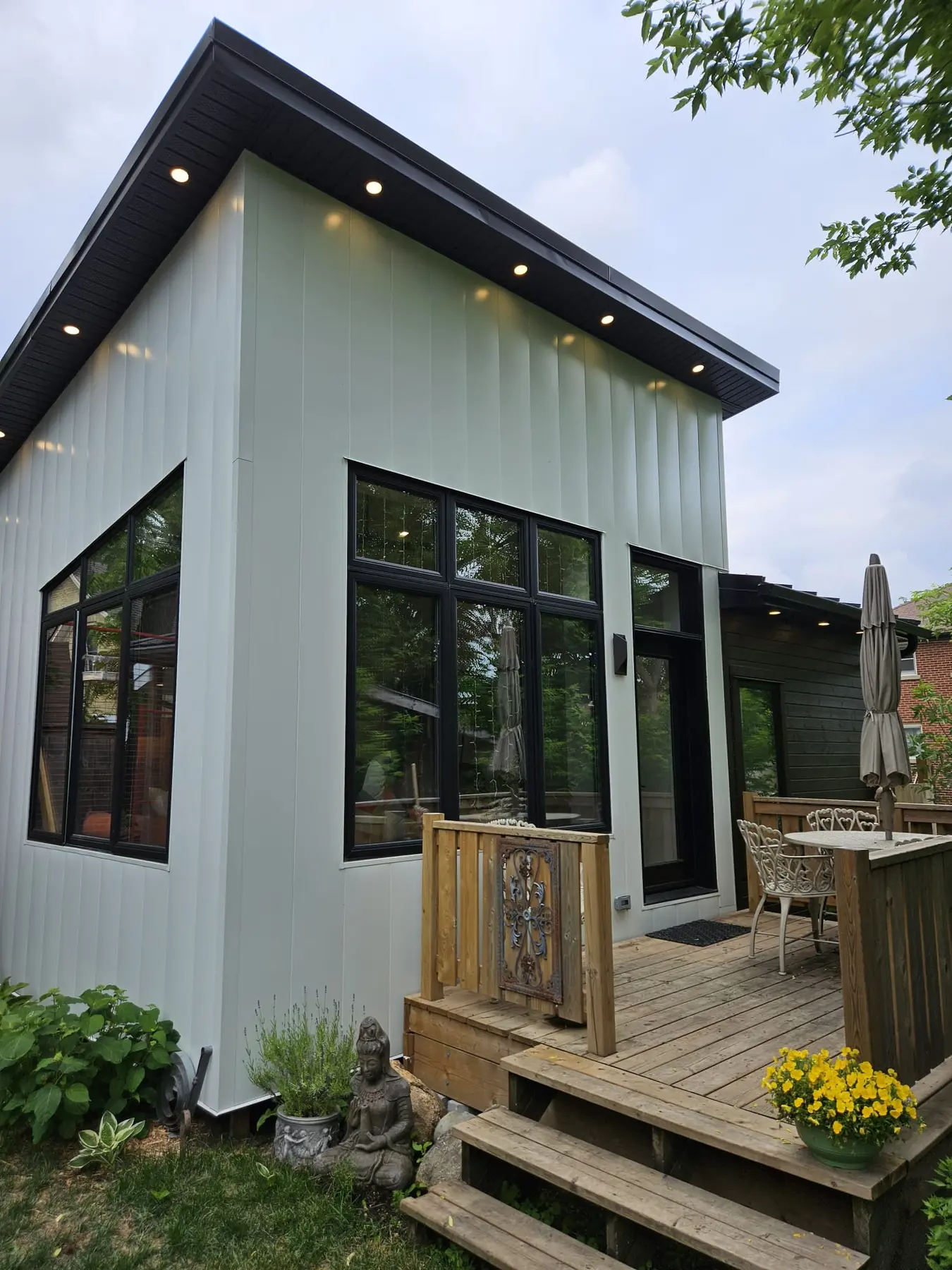
Case Study · Garden Suite · Kitchener
An all-electric garden suite built to Passive House-tier airtightness — designed for an aging parent to live close by with comfort and dignity. The second detached ADU permitted in the City of Kitchener's pilot garden suite program, and we built it for our own family.
The Brief
When we set out to build a backyard home for my mother-in-law, we weren't taking on a job. We were building for our own family — and that changes how you think about every decision.
This is the standard we hold ourselves to when no one is watching: a small home designed to be lived in for decades, to sit gracefully on the land it shares, and to cost almost nothing to run. It also happens to be the second detached additional dwelling unit started in the City of Kitchener — part of the city's pilot garden suite program — built under Ontario's ADU and secondary-suite rules — where the City asked us for feedback on how the process worked from the contractor side. We started construction in February 2022, completed seven months later, and learned the approvals process the hard way so our clients don't have to.
Designed for the Next Thirty Years
The brief was multigenerational living done properly — independence and dignity for an aging parent, with family close by. That meant designing for aging in place from the ground up, not bolting it on later.
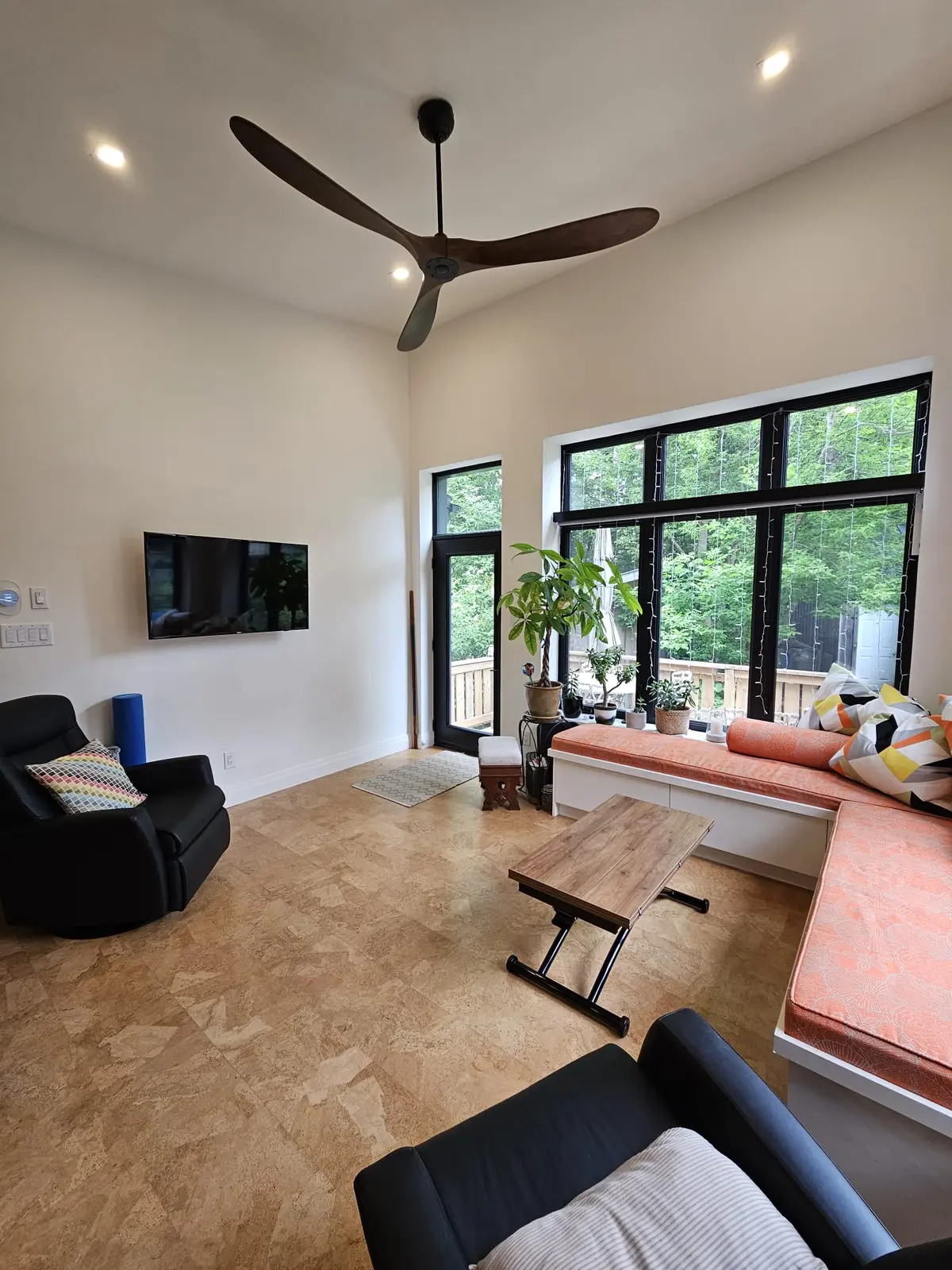
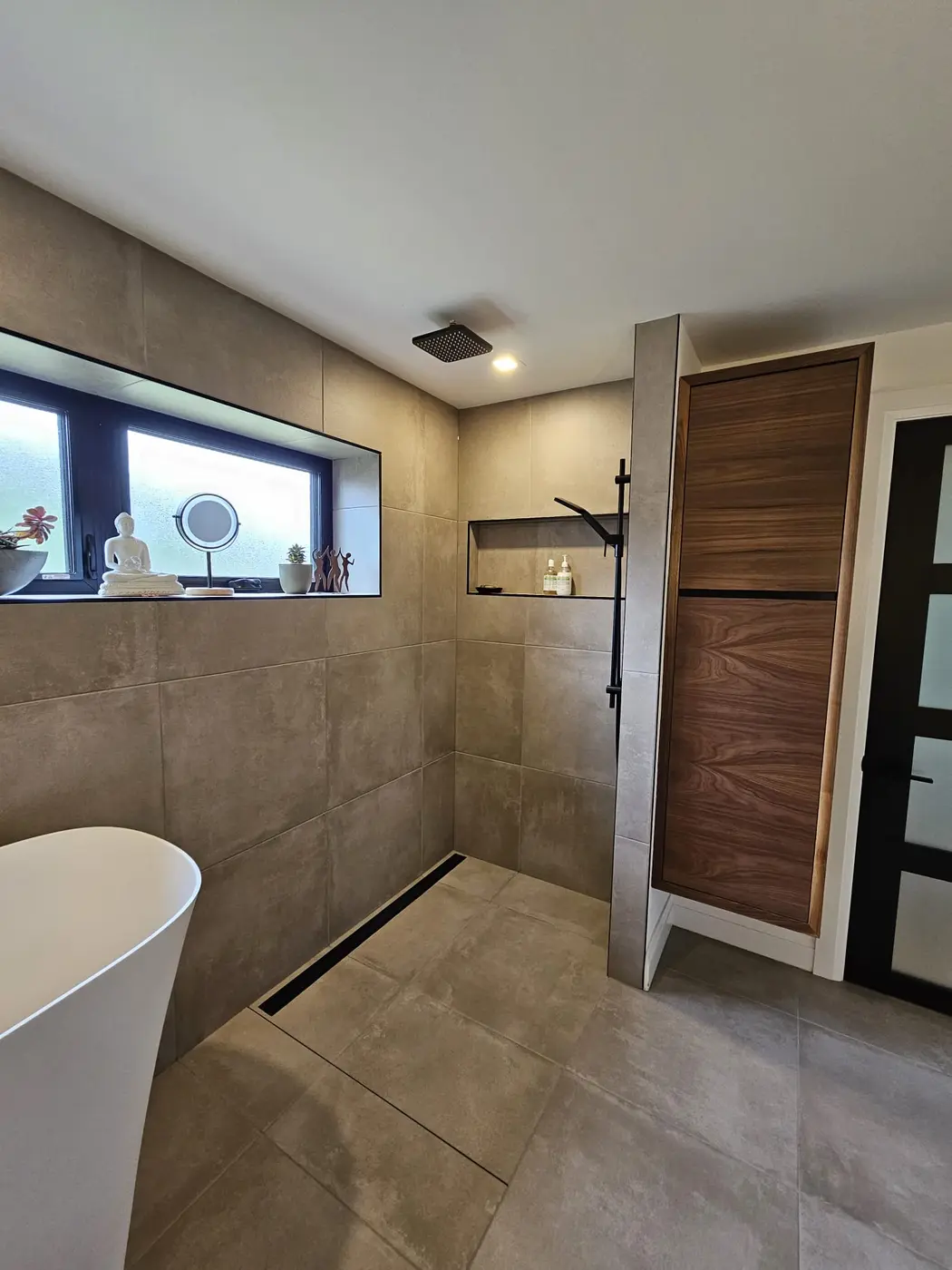
The main floor is single-storey and barrier-free where it counts. A curbless walk-in shower, wide circulation, and a thoughtful four-piece bathroom mean the home works just as well in twenty years as it does today. The 768 sq ft main floor holds an open living and dining space, a full bathroom, a dedicated laundry room, and a kitchen built for real cooking. A finished 144 sq ft loft tucked into the roofline makes a cozy guest room — so when family visits, there's a place for them too.
Sitting Lightly on the Land
The lot is large and beautifully treed, with established gardens that were the whole reason the family loved the property. The garden suite couldn't dominate them. So we oriented and massed the building to preserve the gardens and the long views across the yard, while giving the suite its own clear sightlines to everything happening outside.
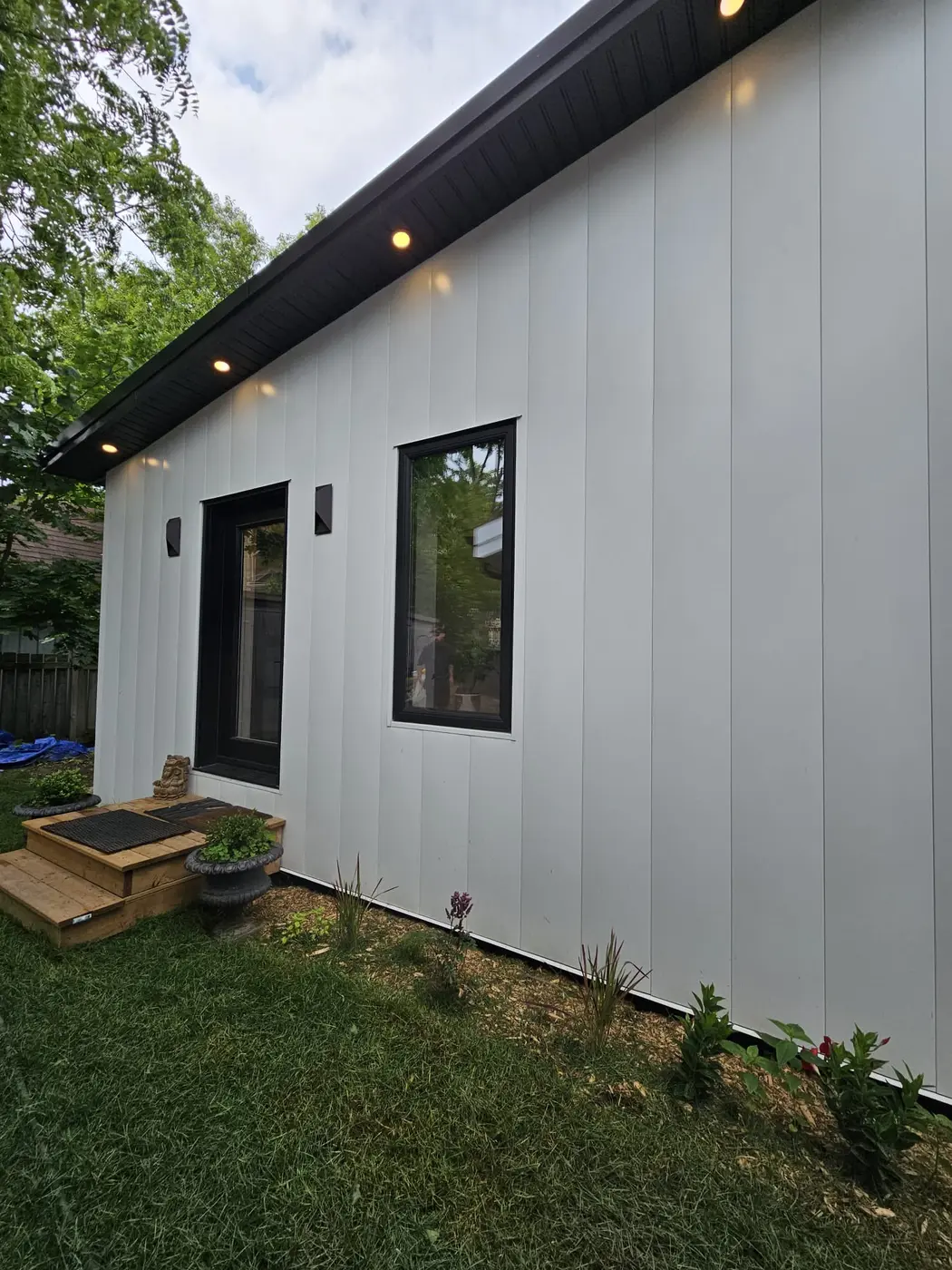
Glazing is concentrated to the south and east — capturing passive solar warmth, morning light, and the best of the garden — while the faces toward the property lines stay private with high transom windows.
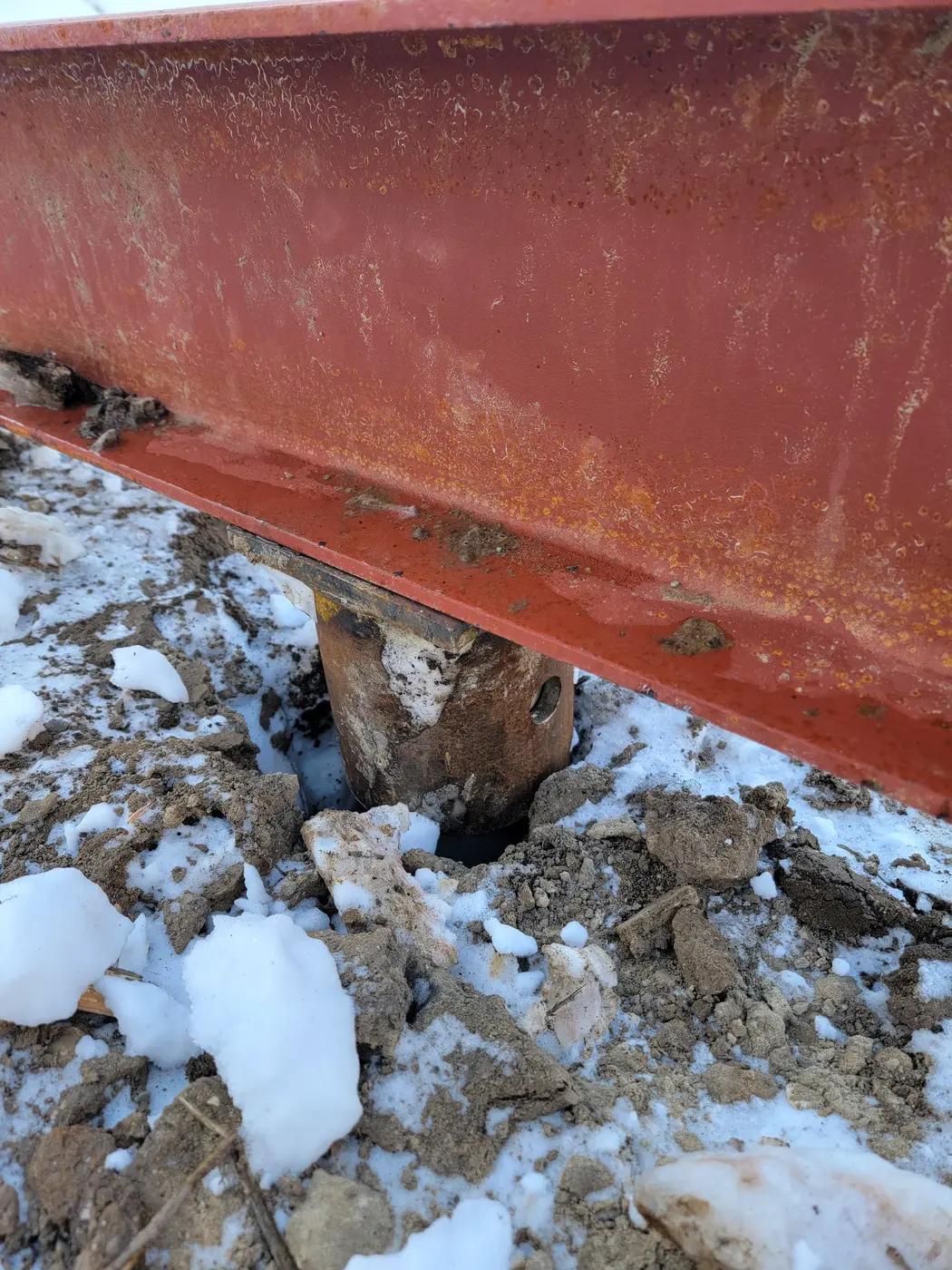
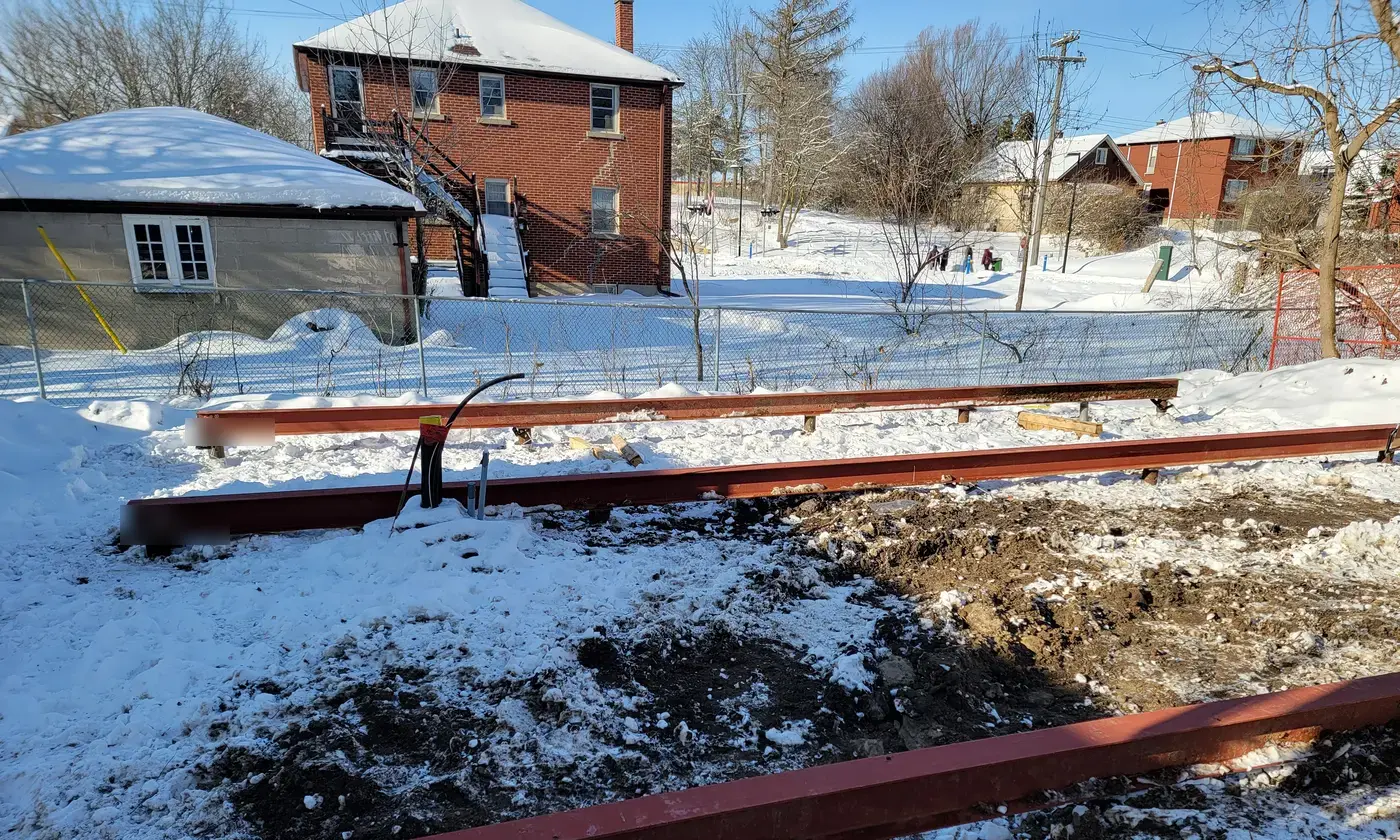
Underneath, the ground was poor. We founded the entire structure on helical piers, some driven more than 48 feet down to reach competent soil. It's invisible in the finished home, and it's exactly the kind of thing that separates a building that settles and cracks from one that doesn't.
From Bare Lot to Home
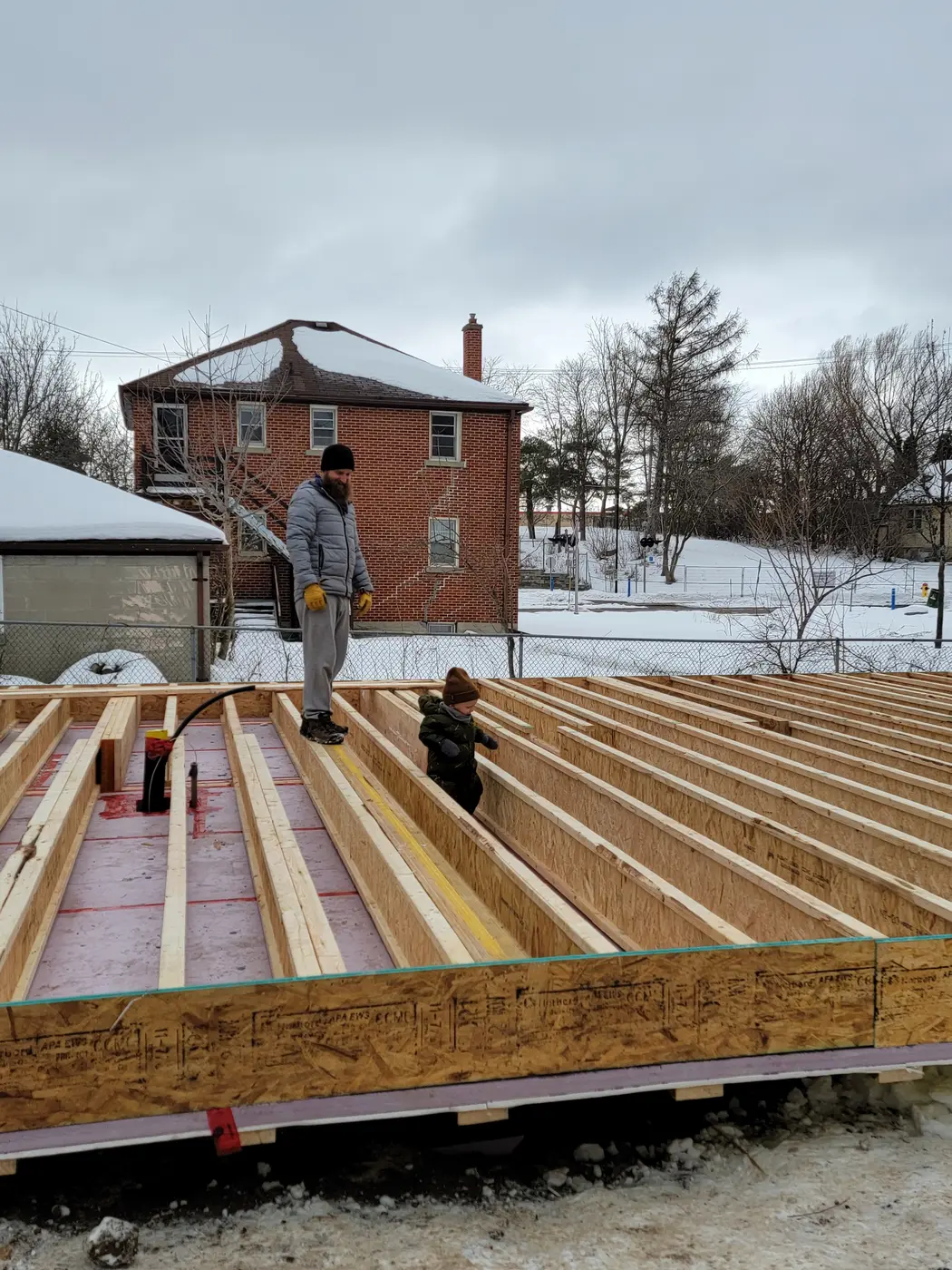
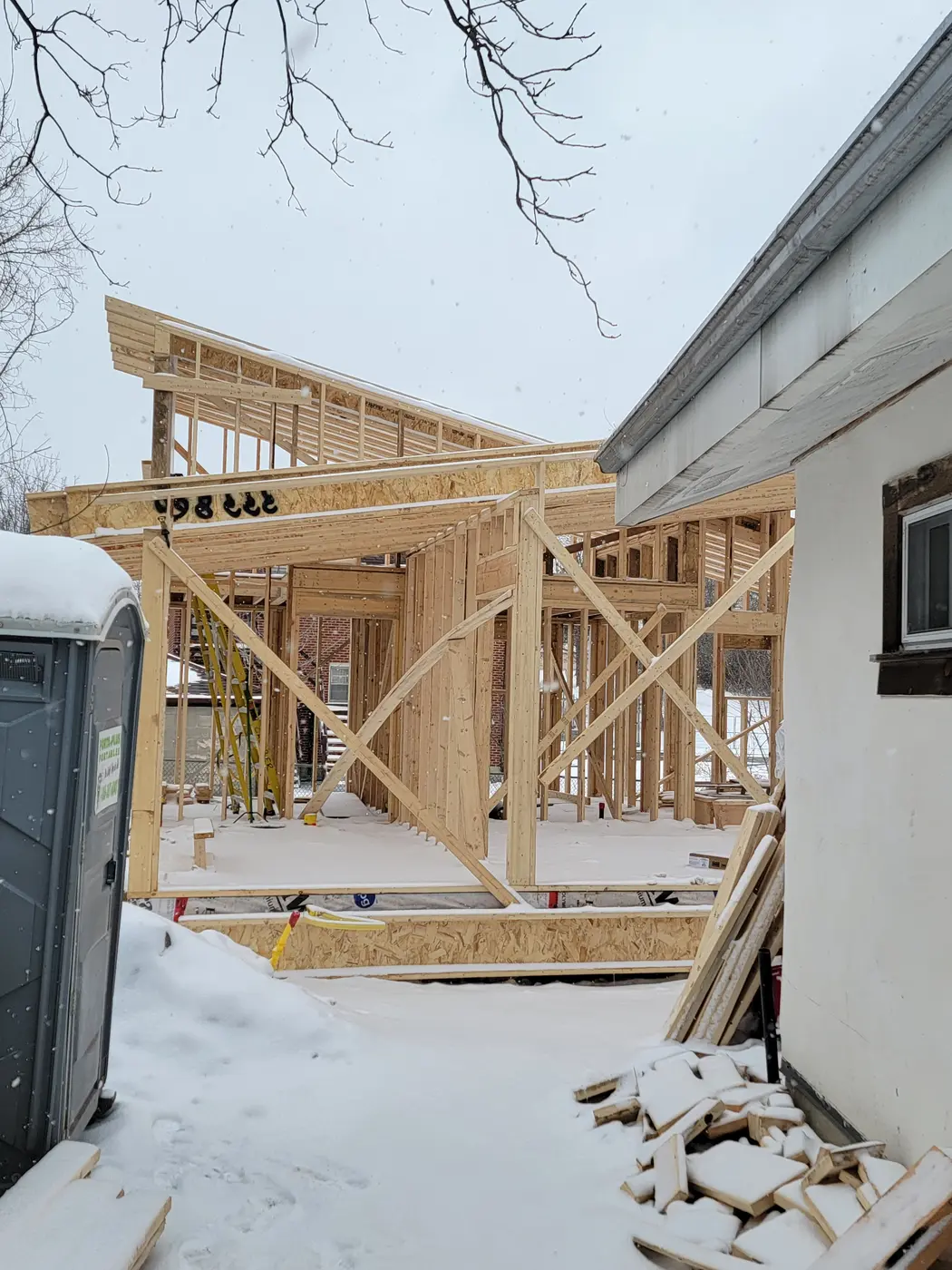
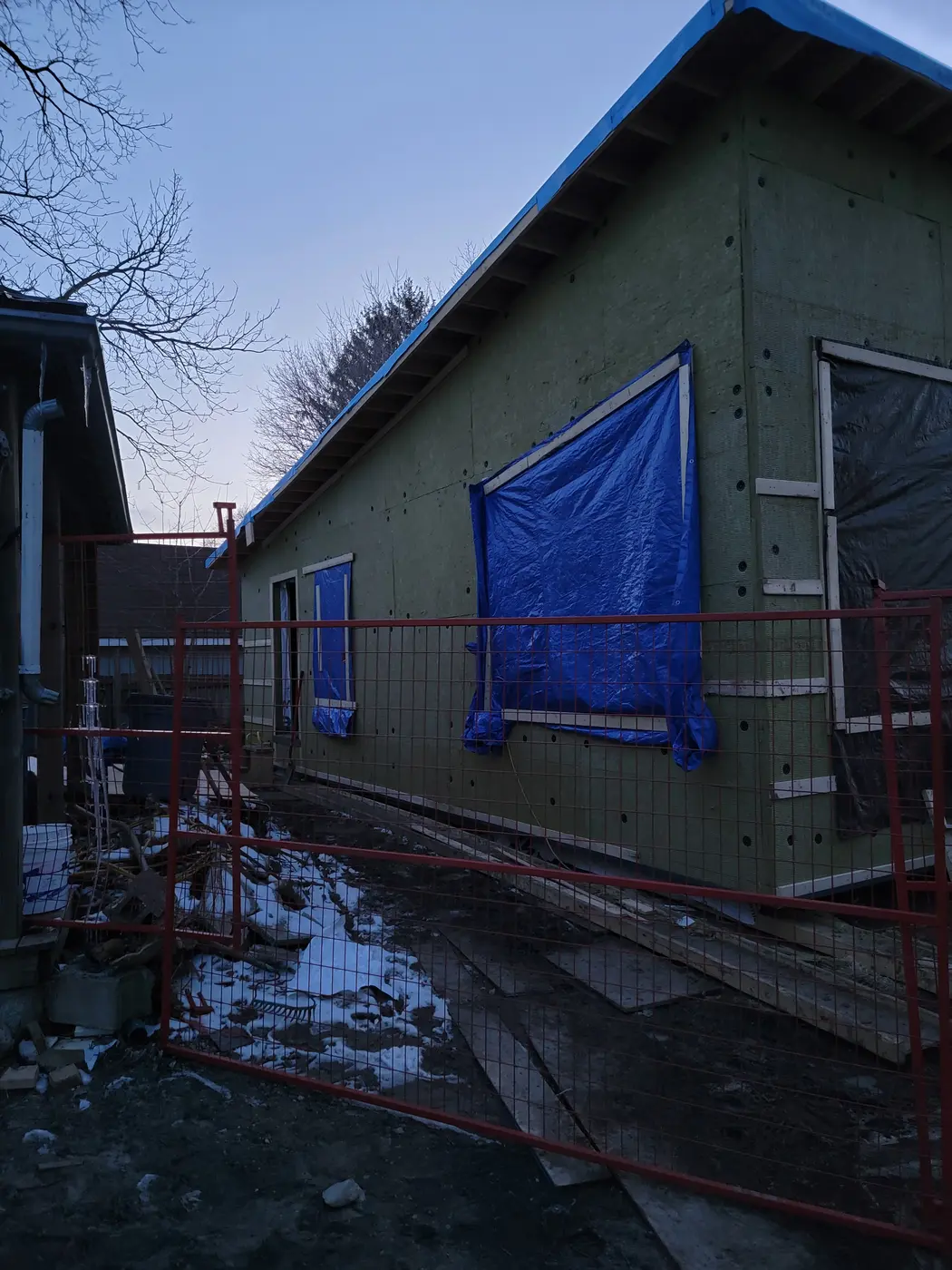
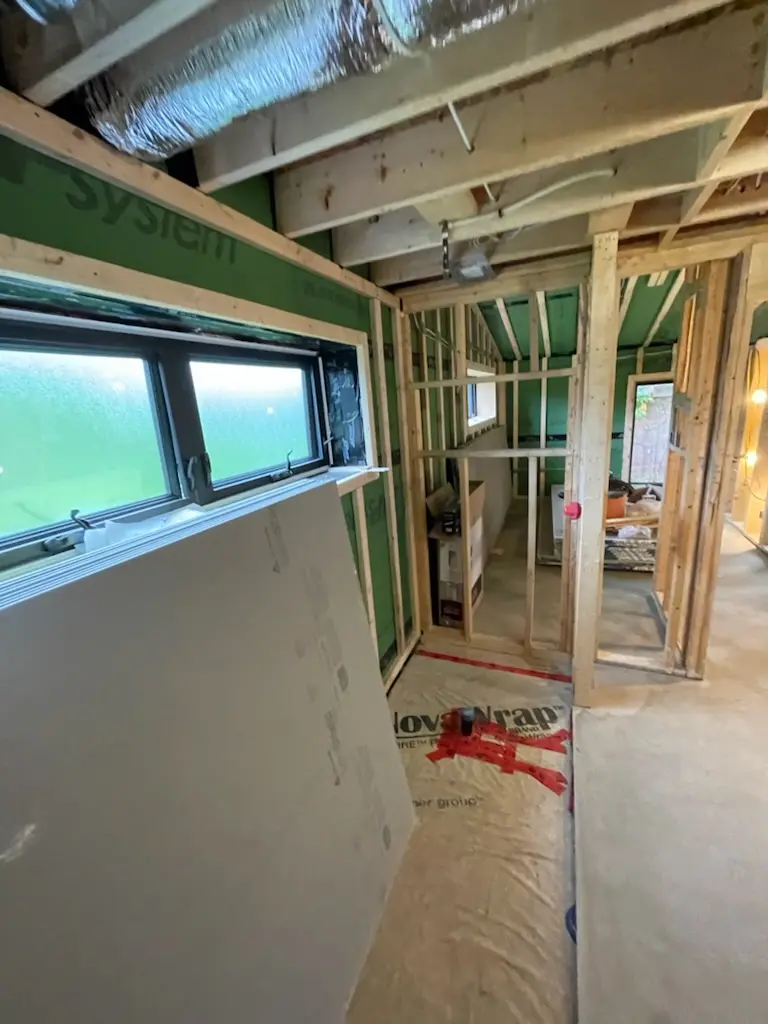
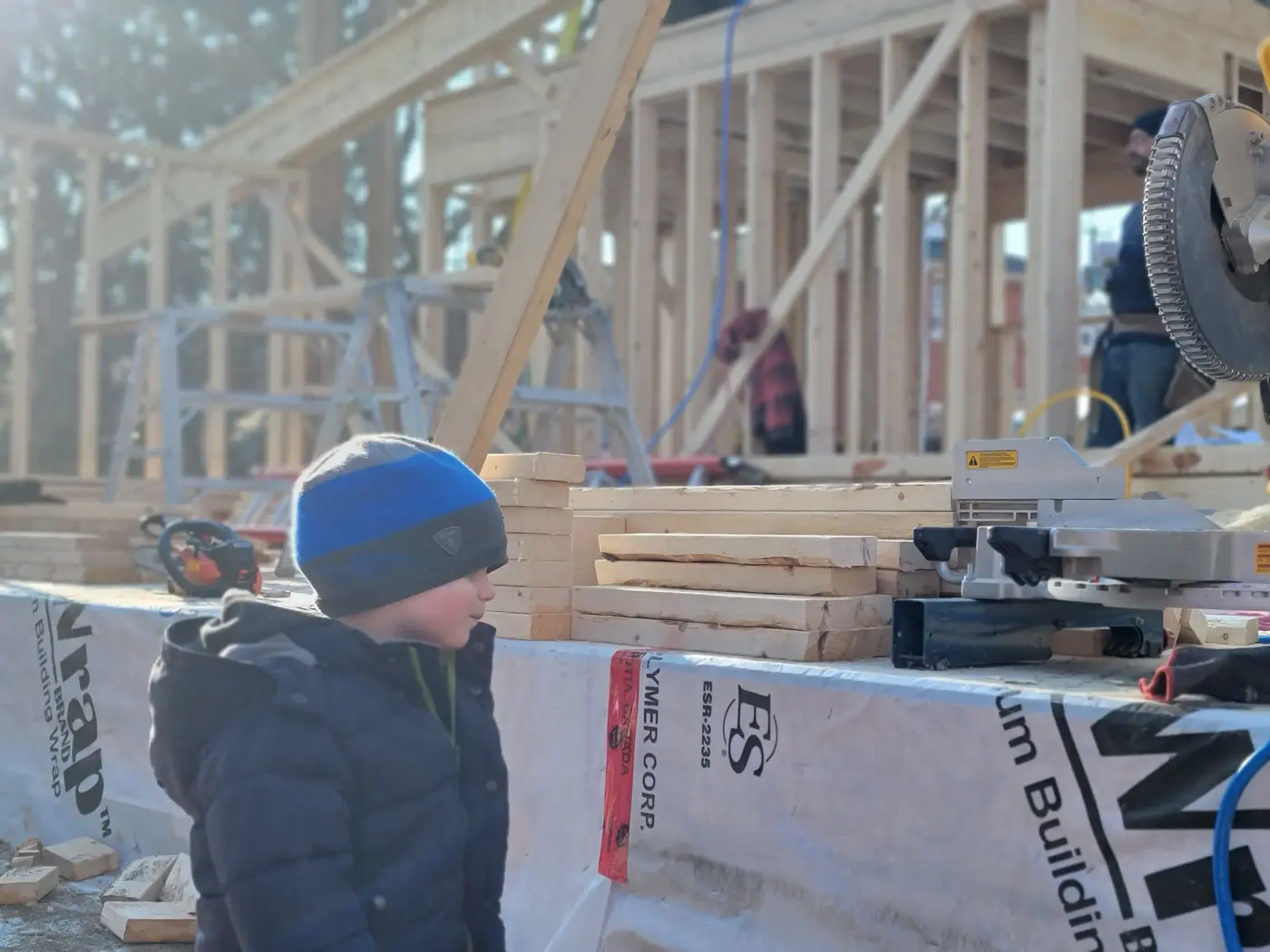
A steel beam grid on piers, an airtight insulated floor, framing in the snow, and an envelope built to Passive House-tier airtightness — assembled by our own crew over the coldest months of the year.
A Home That Costs Almost Nothing to Run
We wanted this home to be quiet, comfortable, and inexpensive to run. So we built the envelope to Passive House-tier airtightness and ran the whole house on electricity.
The walls are 2x6 framing packed with mineral wool, wrapped in an additional four inches of Rockwool Comfort Board on the exterior — a continuous, thermally broken building envelope with no gaps for heat to escape. Triple-pane windows, an airtight assembly with taped sheathing, and careful detailing throughout. A heat pump water heater handles both domestic hot water and in-floor hydronic heat, and a mini-split provides cooling. No gas line, no combustion.
The proof is in the blower door test: 0.6 air changes per hour at 50 Pa — Passive House territory (the standard is 0.6 ACH50), and a number most new homes don't come close to.
Three winters in, the proof is in the operating numbers. My mother-in-law's all-in electricity bills — heat, hot water, cooking, lights, multiple baths a week, lots of laundry, everything on a single hydro meter — typically run around $180 a month in the dead of a Kitchener winter, and less the rest of the year. The worst bill I've ever seen was $220 — and that one tipped us off that her water heater was failing, which we promptly repaired. A small enough envelope that a single faulty appliance moved the needle. That's a fully detached home running on zero gas, with heavy real-world use, no compromise on comfort.
Materials Chosen to Last
We made a deliberate choice to build with steel and wood instead of vinyl and fiberglass. A standing seam steel roof tops the home, and the walls play two materials against each other: warm wood lap siding on one portion, and clean, flat steel panels installed vertically with hidden fasteners on the other — one soft and natural, one crisp and contemporary, both built to weather decades.
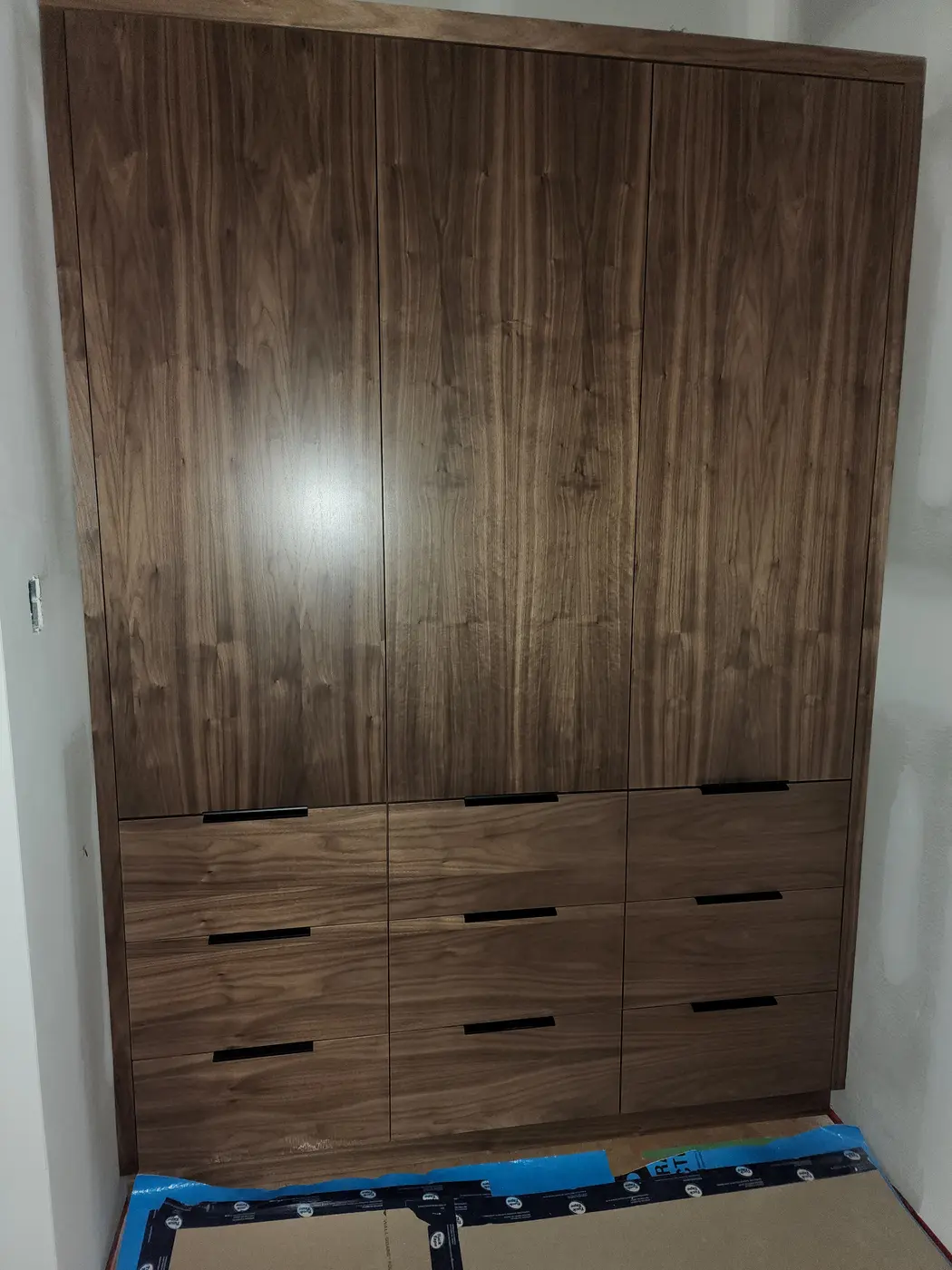
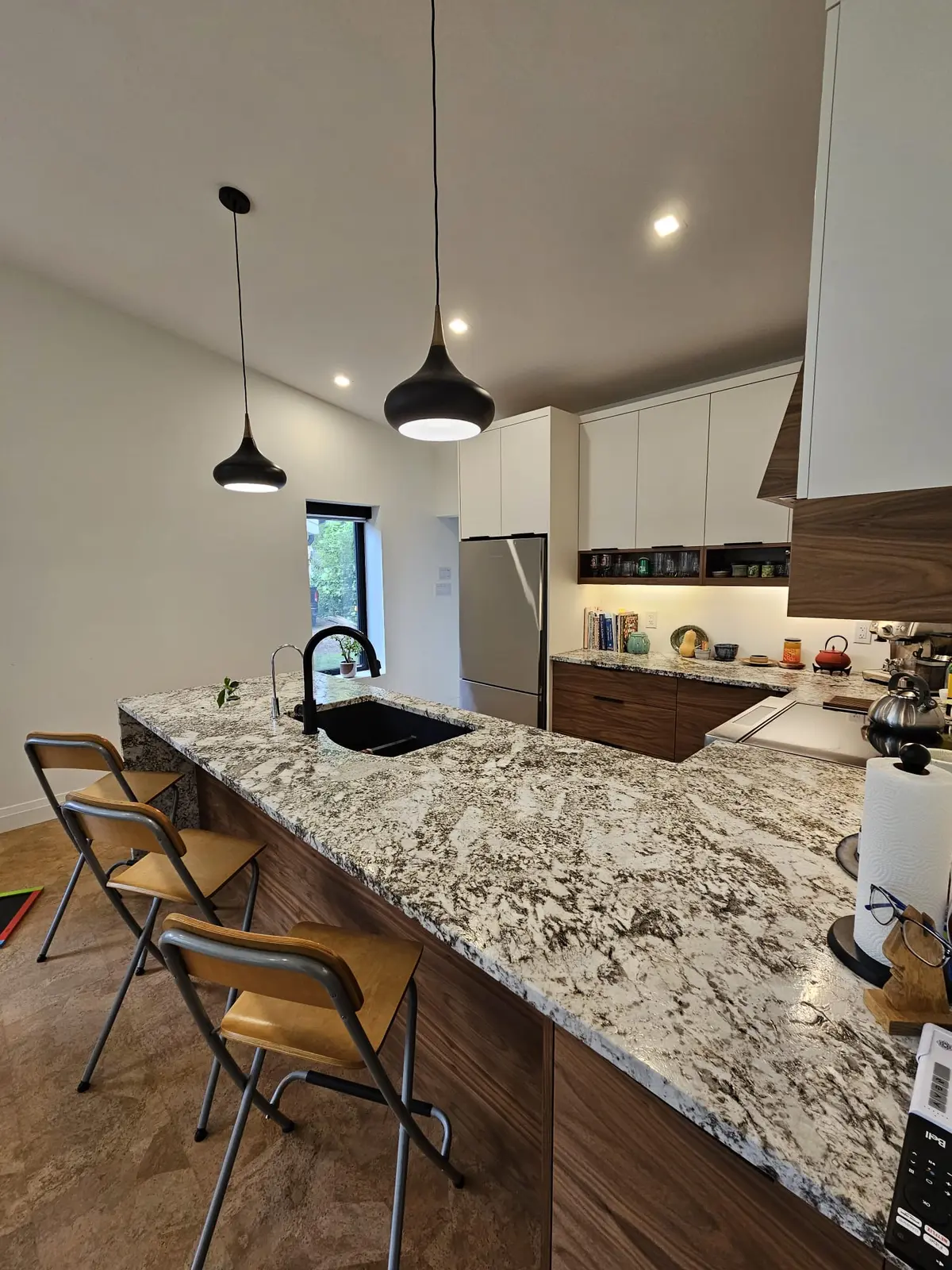
Inside, cork and tile floors replace the laminate plank you'd find in most builds this size. Custom walnut built-ins run throughout. The appliances, counters, and finishes are all specified at the level you'd expect in a custom home — because that's what this is.
The Finished Home
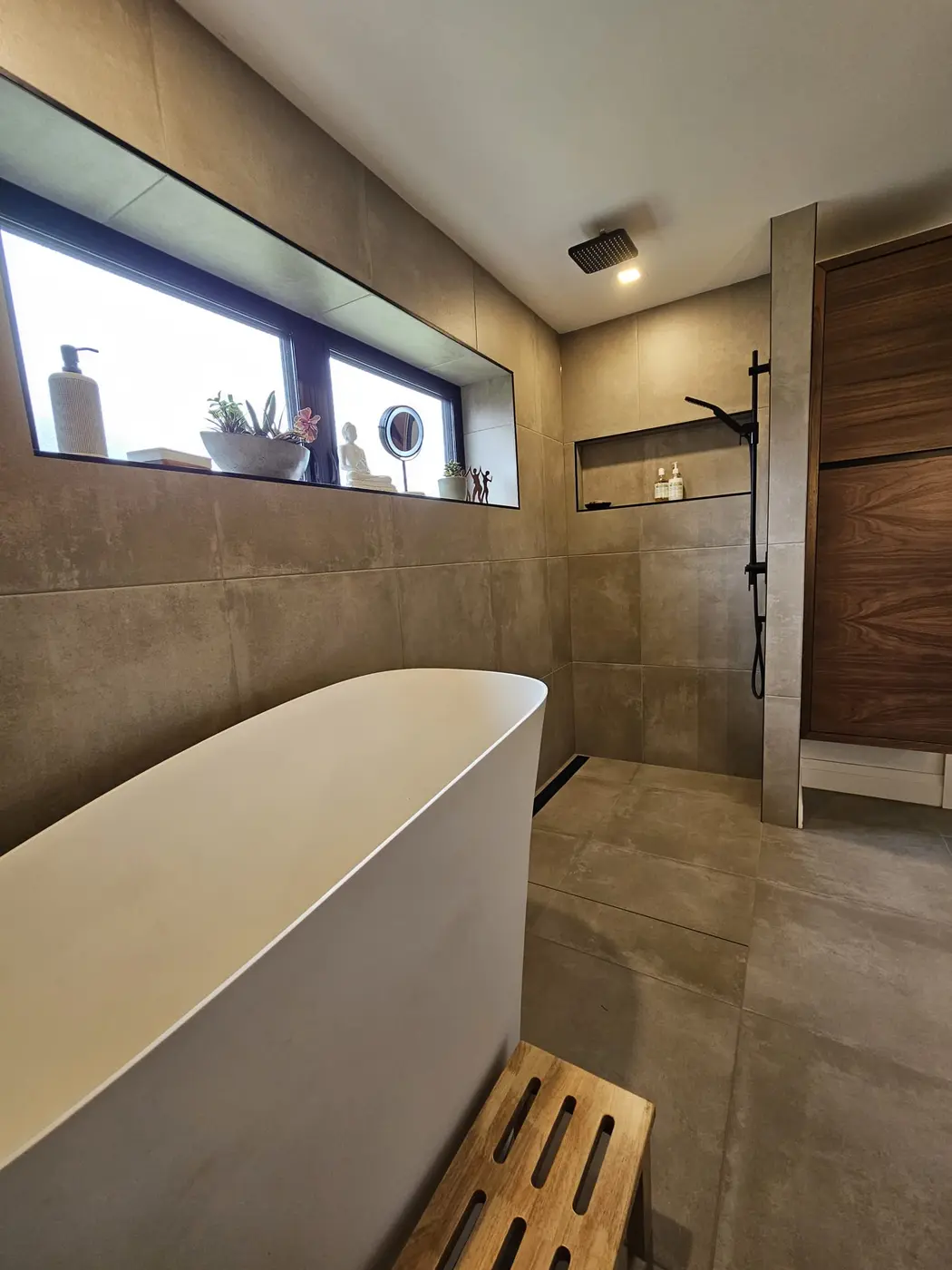
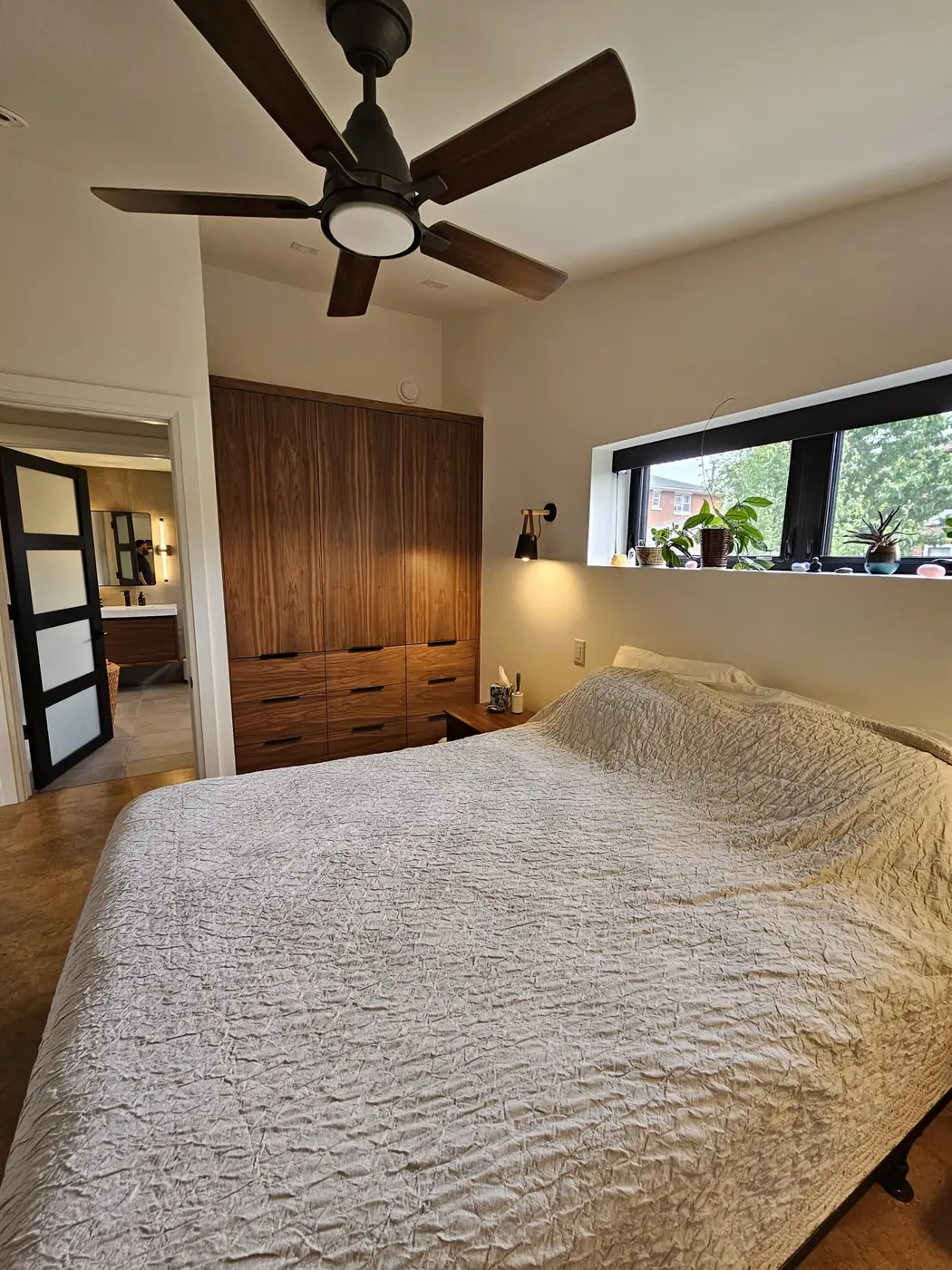
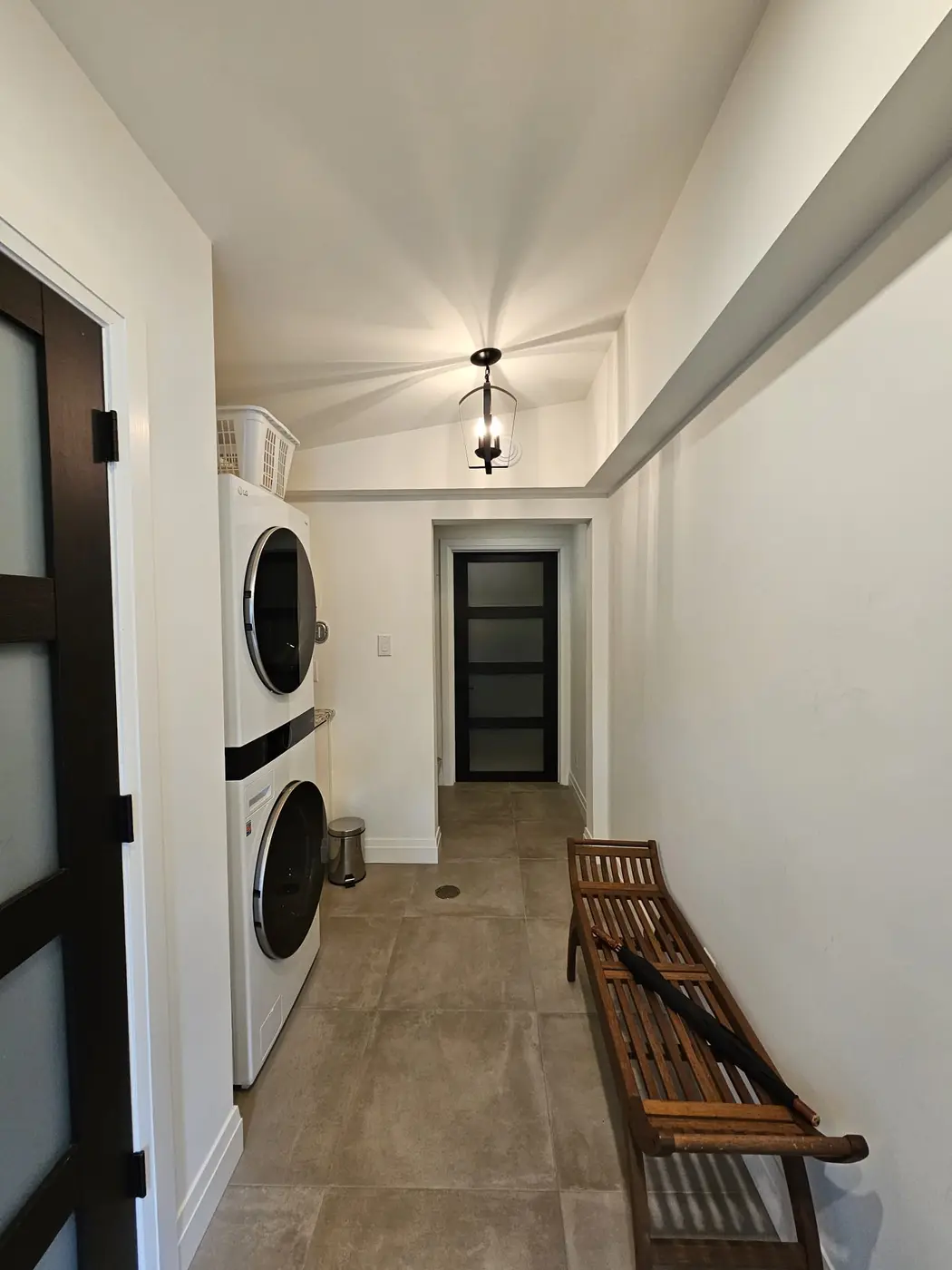
The Result
A 912 sq ft backyard home that looks like it belongs in the yard, lives like a custom house twice its size, welcomes an aging parent with comfort and dignity, and runs on a fraction of the energy of a typical build.
The hardest part wasn't the square footage. It was making the home feel like it had always been here — and on that count, it disappears into its garden exactly the way we hoped.
"We built it for our own family. We'd build yours the same way."
Design. Build. Elevate.
Common Questions
It varies widely with size, foundation, servicing distance, and finish. This one was built to a custom-home standard, well above a baseline suite. We give every client a rolled-up scope range after seeing the property — the variables move the number too much for a single per-foot rule to be honest.
Construction ran about seven months, starting in a Kitchener winter in February 2022 and reaching occupancy later that year. Design, engineering, and permitting happen before that and typically add several months for a detached suite.
A detached garden suite needs a building permit and a Kitchener zoning occupancy review, and depending on lot coverage and setbacks, a minor variance through the Committee of Adjustment. We worked this process directly with the City as a pilot-program build.
Ontario's Bill 23 requires municipalities to permit up to three units per lot, and most low-rise lots in Kitchener, Waterloo, Cambridge, and Brant County can support a detached suite, subject to setbacks, parking, and servicing. We run a feasibility check before any design work.
Related Reading
Garden suites, basement apartments, above-garage and attached units — costs, rules, and ROI across the region.
Designing homes that stay comfortable and accessible for decades — barrier-free showers, wide circulation, and thoughtful detail.
Up to $7,500 federal MHRTC for Ontario families building a secondary suite for an aging parent or family member with a disability.
How continuous insulation, airtight assemblies, and triple-pane glazing make a home quiet, comfortable, and cheap to run.
Client Reviews
★ ★ ★ ★ ★ 4.8 · 56 reviews on Google
"From the initial phone call to the final walk-through of our beautifully transformed home, the entire process was smooth with no delays."
"Jamie was great to deal with, very informative and knowledgeable. The bathroom was done on time and looks great."
Thinking About a Garden Suite?
We've been through the approvals, the engineering, and the build firsthand — on our own property. Let's talk about what's possible on yours.