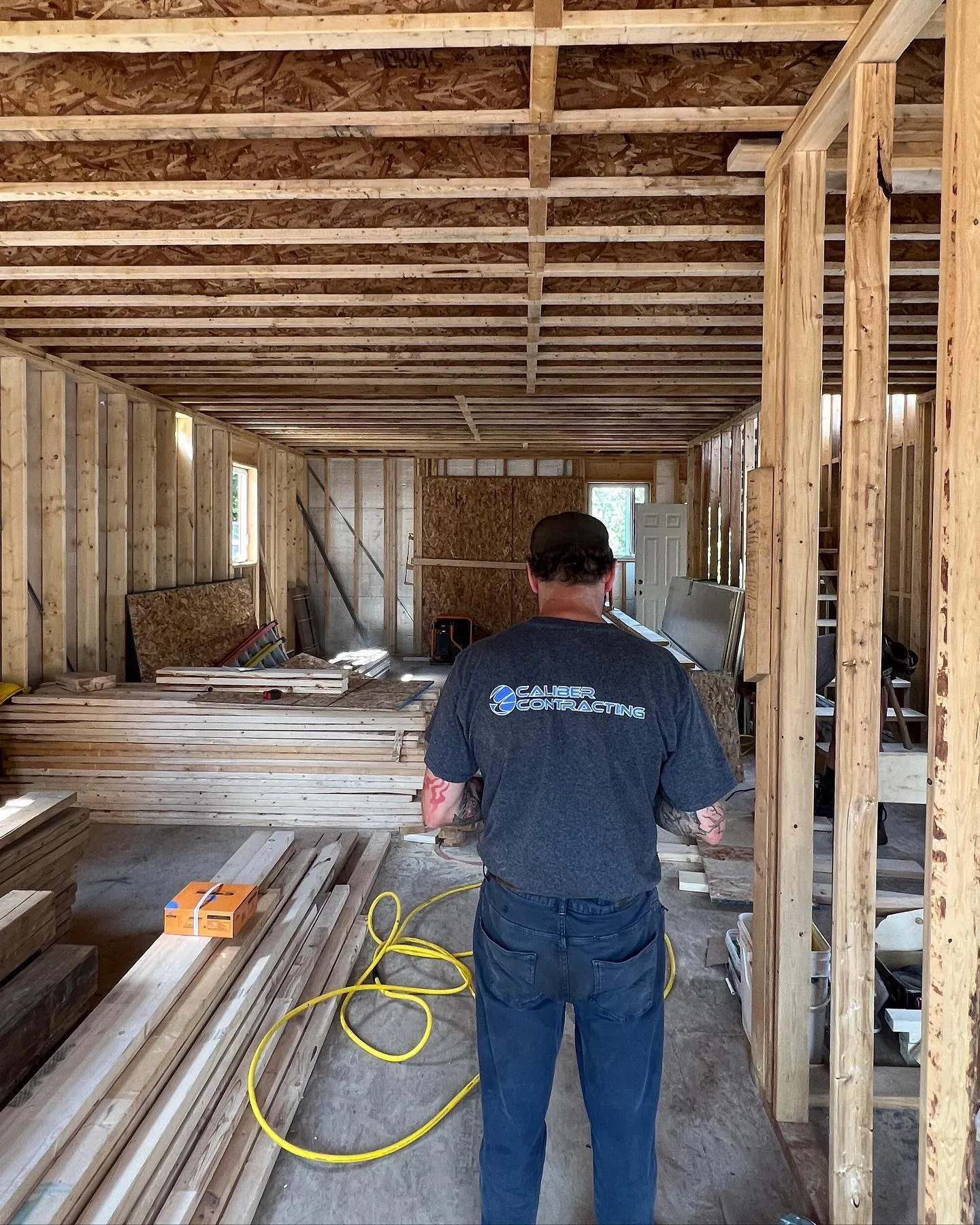
Most renovation horror stories follow the same script. A homeowner finds someone with a low price and a confident pitch. Work starts. Then stalls. The contractor is hard to reach, then impossible. The deposit is gone. The project is half-finished. What follows is months of stress, legal headaches, and paying someone else to fix what the first contractor didn't.
This isn't rare. In Ontario, 63% of homeowners report major problems with their contractors — and on projects over $20,000, that figure rises to 79%. Consumer Protection Ontario fields thousands of contractor complaints each year, and the Kitchener-Waterloo region is no different — the volume of new construction and renovation activity here means a proportional number of operators who shouldn't be trusted with your home.
This guide is our honest take on what to look for, what to run from, and what questions to ask before you sign anything.
The Red Flags: Walk Away From These
This is non-negotiable. Any legitimate contractor working in Ontario must carry general liability insurance and must be registered with the Workplace Safety and Insurance Board (WSIB). If a worker is injured on your property and the contractor doesn't have proper WSIB coverage, you can be held financially responsible. Ask for a Certificate of Insurance and a WSIB Clearance Certificate — both current, both specific to your project. If they hesitate or make excuses, stop the conversation.
A reasonable deposit is 10–15% of the project value at contract signing, sometimes with an additional materials deposit at construction start. Any contractor requesting 30%, 40%, or 50% before work begins is a significant warning sign. Contractor fraud in Ontario most commonly involves collecting large deposits and disappearing, or starting work and abandoning the project once they have enough of your money. Tie payments to milestones, not to calendar dates.
High-pressure urgency tactics — "I have a crew available right now but they're booked next week" or "this price expires at the end of the day" — are classic pressure-selling techniques. A reputable contractor with consistent work has no reason to rush you into a decision. If they're creating artificial urgency, ask yourself why they're that eager to close you before you can do due diligence.
Unpermitted work is your problem, not theirs. When you sell your home, a buyer's inspector or lender will often discover unpermitted structural or mechanical work — which can kill a sale, require remediation, or reduce your home's value. Unpermitted work can also void your homeowner's insurance policy if a claim arises from that area. Any contractor who frames permit avoidance as a favour to you is either cutting corners, hiding something about their registration status, or both.
If you get three quotes and one is 40% lower than the other two, it's not a deal. It's a gap in scope, an underqualified crew, substandard materials, or a contractor who will make up the difference in change orders once they're on site. Competitive pricing exists, but gravity applies to construction: you get what you pay for. Understand why a quote is low before treating it as an advantage.
Ask for three to five references from projects completed in the last two years, similar in scope to yours. Then actually call them. Ask specific questions: Did the project finish on schedule? Were there unexpected costs? How was communication when problems arose? Would you hire them again without hesitation? Scripted or vague references, or a contractor who can only provide one reference, are red flags. Strong contractors have a deep bench of willing past clients.
In Ontario, any home renovation contract over $50 must be in writing under the Consumer Protection Act. But the legal minimum isn't enough — a proper contract specifies scope line by line, materials and specifications, a payment schedule tied to milestones, a timeline with start and substantial completion dates, a change order process, and dispute resolution language. A one-page agreement with a total price and a start date is not a contract that protects you.
A contractor without Google reviews, a website, or any verifiable track record is a contractor without accountability. This doesn't mean a newer company is automatically suspect — but it does mean you have less to verify. Cross-reference their business name, registration, and physical address. Ask how long they've been operating and ask to see evidence of past work. Established contractors have digital footprints.
What Good Contractors Actually Look Like
It's not just about avoiding the bad ones. Knowing what a trustworthy contractor looks like makes the comparison obvious.
A contractor who's genuinely interested in doing the project right wants to understand the scope fully before they quote. If they give you a number within 10 minutes of walking your home, be skeptical.
You should be able to see exactly what you're paying for — labour by trade, materials with specifications, allowances clearly marked as allowances, and exclusions explicit.
Good contractors handle permits as a matter of course and explain to you which permits apply and why. They don't wait to be asked.
An experienced contractor knows where hidden costs live — in the walls of older homes, in structural discoveries, in material lead times. A contractor who presents only optimistic scenarios hasn't been doing this long enough or isn't being straight with you.
Before the project starts, they tell you: who your point of contact is, how often you'll receive updates, and how to reach them if something urgent comes up during construction.
Most general contractors use subcontractors for electrical, plumbing, and HVAC. Ask who they work with and verify those trades are licensed. Your project's quality depends on the full team, not just the GC.
Verifying a Contractor's Credentials in Ontario
What to Check
Ontario doesn't require a single provincial licence for general renovation contractors. But specific trades do require credentials, and registration requirements apply to new home builders and certain business types. Here's what to verify:
- Electrical contractors must be registered with the Electrical Contractor Registration Agency (ECRA). Verify at ecra.org.
- Gas fitting work must be performed by a TSSA-licensed gas fitter. Verify at tssa.org.
- New home builders must be registered with Tarion. Verify at the Ontario Builder Directory at hcraontario.ca.
- WSIB coverage can be verified with a Clearance Certificate valid for the project period.
- Business registration can be confirmed through the Ontario Business Registry at ontario.ca.
Reviews Worth Trusting
Google reviews are the most reliable — they're tied to verified accounts and are difficult to manipulate at scale. Houzz reviews come from verified project clients. HomeStars and TrustedPros both have review verification processes. Facebook reviews are useful but less curated. Be wary of testimonials that exist only on the contractor's own website with no external corroboration.
In nearly two decades of contracting in the Kitchener-Waterloo region, we've completed a number of projects that started with someone else. The pattern is consistent: a homeowner chose the lowest quote, the project failed in some way — contractor disappeared, work was substandard, budget ballooned through undisclosed change orders — and we were hired to finish what was left. Fixing someone else's bad work costs more than doing it right the first time. The premium you pay for an accountable contractor is insurance, not waste.
Questions to Ask Before You Sign
- Can you provide proof of general liability insurance and a current WSIB Clearance Certificate?
- Who pulls the permits, and who is responsible for managing inspections?
- Can you provide three references from similar projects completed in the last two years?
- How is your payment schedule structured and what triggers each payment?
- How do you handle scope changes — what is your change order process?
- Who are your primary subcontractors for electrical, plumbing, and HVAC?
- What's your current project workload and who specifically will be on my job daily?
- What does your warranty cover and for how long?
- What's the most common reason projects like mine go over budget or over time?
- What's your process if we discover something unexpected inside the walls?
A contractor who is confident, experienced, and accountable will answer all of these questions directly and without irritation. Defensiveness, evasion, or impatience with due diligence questions is itself a red flag.
Weighing project models as well as contractors? Read our honest comparison: design-build vs general contractor in Ontario.
Frequently Asked Questions
Ontario does not have a single provincial contractor license for general renovation work. However, contractors must hold a valid business registration, and specific trades must be licensed: electricians must hold an ECRA license, gas fitters must be licensed by TSSA, and plumbers must hold a master plumber certificate. New home builders must be registered with Tarion. Ask to see these credentials before work begins.
A reasonable deposit for a renovation project in Ontario is typically 10–15% of the total contract value, paid upon signing. Some contractors request a materials deposit at the start of construction. Be cautious of any contractor who asks for more than 30% upfront before any work begins — this is a common pattern in contractor fraud.
A proper Ontario renovation contract should include: a detailed scope of work (materials, quantities, specifications), a payment schedule tied to project milestones, a project timeline with start and substantial completion dates, a change order process, a dispute resolution clause, proof of insurance and WSIB coverage, and the contractor's licence and registration information. Avoid any contractor who won't provide a written contract.
You can check the Better Business Bureau (BBB) for complaints and ratings, search Consumer Protection Ontario's database, check Google and Houzz reviews, and ask the contractor for references you can actually contact. Tarion's Ontario Builder Directory lets you verify new home builder registration. For electrical work, ECRA's website lets you verify contractor registration.
If a contractor abandons a project, document everything (photos, communications, payment records) and send a written demand via registered mail. Contact Consumer Protection Ontario if the contractor is a home renovation business. If the amount is under $35,000, Small Claims Court is an option. Check whether the contractor is bonded — a surety bond can cover completion costs. This situation is extremely stressful and costly, which is why vetting the contractor thoroughly before signing is critical.
Before comparing quotes, understand how the contract itself shifts risk: Fixed-Price vs. Cost-Plus — who pays when a renovation goes over budget.
Work With a Contractor You Can Verify
Caliber Contracting has operated in the Kitchener-Waterloo region since 2007. We're fully insured, WSIB-covered, Tarion-certified, and happy to provide references, credentials, and a detailed contract before any work begins.
Start a Conversation