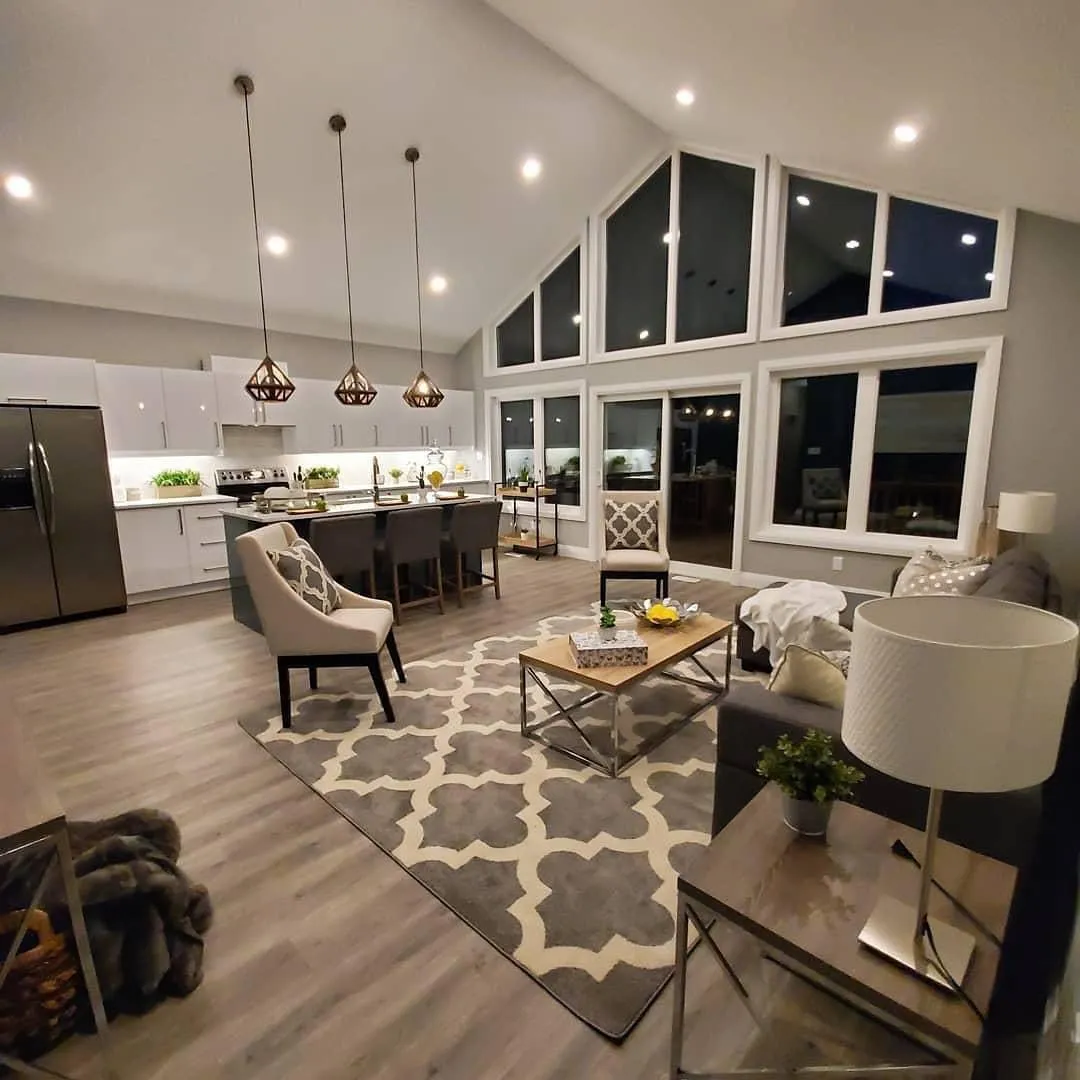
Open concept is the most requested layout change in residential renovation. Homeowners want to knock down walls, connect the kitchen to the living room, and create the bright, airy spaces they see on design shows. And in most cases, it’s absolutely achievable.
But “knocking down a wall” is never as simple as it sounds on television. Here’s what’s actually involved.
Load-Bearing vs. Non-Load-Bearing Walls
This is the first and most important question. A non-load-bearing wall (partition wall) can be removed with minimal structural implications. A load-bearing wall carries the weight of the floor or roof above it and cannot simply be removed — it must be replaced with a structural beam that carries the same loads to the remaining supports.
How to tell the difference: You can’t always tell by looking. Walls that run perpendicular to floor joists are likely load-bearing. Walls that run parallel to joists may or may not be. Walls in the centre of the house are more likely load-bearing than walls along the perimeter. But the only reliable way to determine this is to have a structural engineer or experienced contractor assess the wall and the framing above and below it.
Never remove a wall without confirming whether it’s load-bearing. Removing a load-bearing wall without proper support can cause immediate structural failure or gradual sagging that causes serious damage over time.
What Replacing a Load-Bearing Wall Looks Like
When a load-bearing wall is removed, it’s replaced with a beam — typically engineered LVL (laminated veneer lumber) or steel. The beam spans the opening and transfers the loads to posts at each end, which carry the loads down to the foundation.
The size of the beam depends on: the span (how wide the opening is), the load above (single-storey vs. two-storey, roof loads), and the species and grade of the beam material. A structural engineer sizes the beam based on these calculations. This is not guesswork — it’s math.
Temporary support. Before the existing wall is removed, temporary support walls are built on each side to hold the loads while the beam is installed. This is a critical safety step.
Posts and footings. The beam sits on posts at each end. These posts need to transfer the concentrated load all the way down to the foundation. If the posts land on an existing bearing wall below, the loads transfer naturally. If they land on a floor with no support below, a new footing may be required — which means cutting into the basement floor to pour a concrete pad.
Cost
Removing a non-load-bearing wall: $2,000–$5,000 (includes drywall patching, flooring transitions, and ceiling repair).
Removing a load-bearing wall and installing a beam: $8,000–$25,000 depending on span, loads, beam material (LVL vs. steel), and whether new footings are required. A simple 10-foot LVL beam on a single-storey home is at the lower end. A 20-foot steel beam on a two-storey home requiring new footings is at the upper end.
These costs are for the structural work only. The total cost of an open-concept renovation includes new flooring to unify the space, updated lighting, ceiling refinishing, and often a new kitchen layout to take advantage of the opened space.
When Open Concept Works Best
Open concept works best when: the kitchen, dining room, and living room are on the same floor level (no steps between rooms), the home has adequate natural light to fill the larger space, and the HVAC system can heat and cool the combined volume effectively.
Open concept works less well when: you have a split-level with half-floor transitions (the steps create awkward sightlines), the combined space is too large for the available natural light (creating a dark centre), or you frequently need acoustic separation (home office, multigenerational living).
Frequently Asked Questions
$8,000–$25,000 in the Kitchener-Waterloo region, depending on span, loads, beam material, and whether new footings are required.
The only reliable method is assessment by a structural engineer or experienced contractor. General rules (perpendicular to joists, centre of house) are indicators but not definitive.
Yes, if the wall is load-bearing. Structural modifications require a building permit with engineering documentation. Non-load-bearing partition walls can typically be removed without a permit.
Want to Open Up Your Floor Plan?
Caliber Contracting has opened up hundreds of floor plans across the region. We understand structural load paths and design open spaces that work for how families actually live.
Start a Conversation