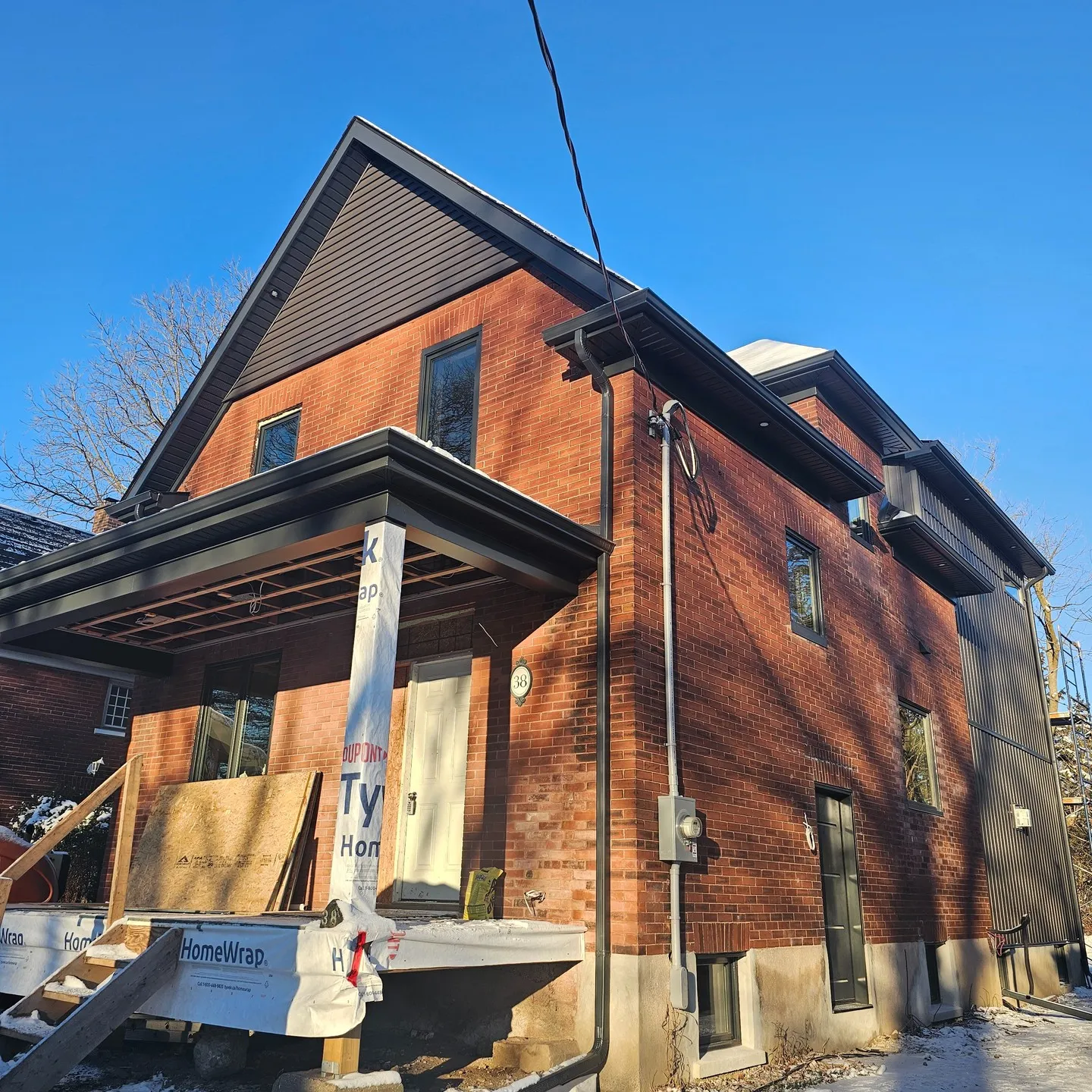
A whole-home renovation in Kitchener-Waterloo typically costs $180,000 to $650,000 in 2026 — roughly $250 to $700 per square foot — depending on the extent of the work, structural changes, and finish level.
Home renovation costs in the Kitchener-Waterloo region range from about $80,000 for a quality cosmetic refresh to $900,000+ for a full gut renovation. The huge spread reflects how different the underlying scopes really are. The same 2,500 sq ft home might receive $100,000 of paint, flooring, and finish updates, or $500,000 of structural reconfiguration, mechanical replacement, and full interior rebuild — both legitimately called “renovations.”
This guide breaks down real renovation costs by scope across our region, with specific city-by-city notes, the major cost drivers, and how to think about renovate-vs-move in 2026’s market. The numbers reflect premium-quality work at the standard Caliber holds for every project. Lower per-square-foot costs are available in the market, but typically reflect different finish standards, less integrated design, or compromised structural and mechanical work.
Renovation Costs by Scope
The lightest scope: new paint, flooring, lighting, kitchen and bathroom finishes — all without changing the layout. Existing walls stay where they are. Plumbing locations stay where they are. Electrical layout stays the same. The work is mostly trade work and finish selection.
What it includes: full interior repaint, new flooring throughout, new kitchen counters and backsplash (existing cabinets often refaced or refinished), bathroom finishes refresh (vanities, toilets, fixtures), updated lighting throughout, hardware updates.
Typical timeline: 2–4 months
Reconfiguring the main floor — opening up walls, redesigning the kitchen, integrating dining and living spaces, often adding or relocating a powder room. The most common premium renovation scope in our region.
What it includes: structural beams where load-bearing walls come down, new electrical and HVAC distribution, refinished or new flooring throughout the main floor, fully redesigned kitchen with new cabinetry and appliances, updated lighting plan, new finishes throughout. Often includes minor exterior work (new entry door, refreshed exterior trim).
Typical timeline: 4–6 months
Multiple major rooms renovated together — main floor plus master ensuite, or kitchen plus all bathrooms, or basement plus main floor. Coordinated as a single project rather than separate phases.
Multi-room scopes are significantly more cost-effective than separate single-room projects. The dust barriers, mechanical access, permit coordination, and design integration that get amortized across multiple rooms reduce per-room cost by 15–25% compared to doing the same work piecemeal over years.
Typical timeline: 5–8 months
Comprehensive renovation of the entire home — main floor, all bedrooms, all bathrooms, basement. Every room gets touched, every system gets evaluated.
What it includes: new flooring throughout, painted top to bottom, kitchen and all bathrooms redone, electrical service upgrade (typically to 200 amp if not already), HVAC service or full replacement, updated trim and millwork, exterior refresh where needed. The home is generally not livable during the work.
Typical timeline: 6–10 months
Strip the home back to studs (or to foundation, in extreme cases), then rebuild. New mechanical, electrical, plumbing, insulation, drywall, finishes throughout. Often includes structural changes — raising ceilings, removing load-bearing walls, repositioning the kitchen, opening up the main floor entirely.
Gut renovations are the most thorough scope short of teardown-and-rebuild. They’re also the only renovation type where you can credibly bring an older home up to current building code, current insulation standards, and current mechanical efficiency in a single project. We see gut renovations most often on century homes in Galt, post-war homes in Westmount and Forest Heights, and significant heritage properties.
Typical timeline: 8–14 months
Cost per Square Foot Reference
Translated to per-square-foot terms (for a typical 2,000–3,000 sq ft home):
- Cosmetic refresh: $40–$90/sq ft of renovated area
- Main floor renovation: $150–$250/sq ft of renovated area
- Whole home renovation: $150–$300/sq ft
- Gut renovation: $250–$450/sq ft
These ranges are wider than they look because the per-square-foot figure depends heavily on whether the scope includes the kitchen and bathrooms (which are 3–5x more expensive per square foot than other rooms) and whether structural changes are involved.
Major Cost Drivers
Layout Changes
The single biggest cost factor in any renovation is whether the layout changes. Removing a load-bearing wall, relocating a kitchen, adding a bathroom, or opening up the main floor all trigger structural engineering, plumbing relocations, electrical rerouting, and HVAC redesign. A renovation that keeps the existing layout costs 30–50% less than the same work with a layout change.
The Age and Condition of the Home
Renovating a 1950s home with original wiring, galvanized plumbing, knob-and-tube remnants, and asbestos in the floor tile costs significantly more than renovating a 1990s home in good condition. The hidden conditions discovered during demolition — rotted framing, outdated electrical, undersized HVAC ducts, foundation cracks — are the biggest budget overruns in any renovation. We allow contingency for this in every project.
The Finish Level
Two kitchens with identical layouts can vary in cost by 3x based on cabinet type (stock vs. semi-custom vs. fully custom), countertop material (laminate vs. quartz vs. stone), appliance package (mid-range vs. premium vs. luxury), and finish details (standard vs. specified hardware, lighting, plumbing fixtures). The same logic applies to bathrooms, flooring, and lighting throughout the home.
Mechanical and Electrical Upgrades
Older homes typically need electrical service upgrades (100-amp to 200-amp), HVAC replacements (older furnaces and undersized ductwork), plumbing updates (replacing galvanized supply lines), and insulation upgrades. None of these add visible value to the renovation, but skipping them on a major renovation is shortsighted — you’ll be reopening walls in 5 years to do them anyway.
Permit and Soft Costs
Architectural design, structural engineering, building permits, and inspections typically add 8–15% to the construction cost. We include these in our quoted budgets so there are no surprises.
Home Renovations by City
Renovation Costs in Kitchener
Kitchener has the most varied housing stock in the region — post-war bungalows in Stanley Park and Forest Hill, 1970s splits in Forest Heights, century homes in Westmount, and newer infill across the city. Each housing type drives different renovation priorities and costs. Westmount century homes typically push budgets higher due to older mechanical systems and heritage considerations. Newer infill homes in south Kitchener and the Doon area have simpler renovations because the underlying systems are modern.
Renovation Costs in Waterloo
Waterloo’s older neighbourhoods (uptown, Beechwood, Westmount Waterloo) typically command higher renovation budgets due to property values and the expectation of premium finishes. The Conestogo and rural Waterloo areas often involve septic considerations and well water systems that affect renovation planning, particularly for kitchen and bathroom additions.
Renovation Costs in Cambridge
Cambridge encompasses three distinct historic centres — Galt, Preston, and Hespeler — with very different housing characteristics and renovation costs. Galt’s heritage core has century homes where gut renovations are common and budgets often run $500,000+. Preston’s mid-century housing has excellent main-floor renovation candidates at typical regional prices. Hespeler and the newer subdivisions have simpler renovations at lower per-square-foot costs.
Renovation Costs in Paris and Brant County
Paris and Brant County renovations often involve rural infrastructure considerations — well water systems, septic capacity, longer mechanical runs. These factors typically add 10–15% to comparable urban renovation budgets. The County of Brant has clear permit processes that we navigate on every rural project.
Specialty Renovation Scopes
Open Concept Renovations
Removing the walls between kitchen, dining, and living spaces to create a single integrated zone. Costs typically run $30,000–$80,000 above a comparable non-structural renovation due to the structural beam, engineering, and mechanical/electrical relocations involved. Done well, the result is dramatically more functional than the original layout. Done poorly, you get a single noisy room with no acoustic separation. We design with careful attention to sight lines, acoustic zones, and lighting to avoid the common pitfalls.
Accessibility and Aging-in-Place Renovations
Renovating a home to support aging in place — or to accommodate a family member with mobility needs — is one of our most rewarding service areas. Scopes range from simple modifications ($15,000–$40,000 for grab bars, lever handles, walk-in showers, single-bathroom upgrades) to comprehensive aging-in-place renovations ($150,000–$400,000 for widened doorways, curbless showers, main-floor primary suite, accessible kitchen, and ramped or elevator access). Caliber’s aging-in-place work consistently rates among our highest-rated projects.
Heritage and Century Home Renovations
Century homes — typically those built before 1925 — have unique renovation considerations: original wood structure that needs assessment, plaster walls, original windows and doors that may have heritage significance, knob-and-tube wiring remnants, and often heritage district overlays that affect exterior changes. Century home renovations typically run 15–30% above comparable non-heritage renovation budgets due to these factors, and design timelines are longer to accommodate heritage review where applicable.
With Kitchener-Waterloo home prices down 8.8% year-over-year and Cambridge down 7.7%, plus high transaction costs (real estate commissions, land transfer tax, legal, moving costs typically totaling $40,000–$80,000 on a $1M home), staying and renovating an existing home often produces a better financial result than selling and buying up. The non-financial factors — neighbourhood, schools, community, the home’s character — also matter. We help clients model both scenarios honestly during the discovery consultation.
What Drives a Quote Higher Than the Range
Some of the things that push renovation budgets above the typical ranges:
- Custom millwork and cabinetry: Fully custom cabinetry runs 2–3x stock pricing
- Imported or specialty stone and tile: Designer materials can add $30,000–$80,000 to a kitchen-and-bath renovation
- Smart home integration: Comprehensive smart home systems add $15,000–$50,000
- Premium appliance packages: The difference between mid-range and Sub-Zero/Wolf is typically $30,000–$60,000
- Heritage considerations: Required heritage approvals, custom-fabricated trim, period-correct materials add 15–30%
- Unforeseen conditions: Asbestos abatement, hidden structural damage, foundation issues, mold remediation
- Schedule acceleration: Compressing a 6-month project into 4 months requires premium trades availability and overtime, typically adding 10–20%
Frequently Asked Questions
Home renovation costs in Cambridge vary by scope. A cosmetic refresh runs $80,000–$180,000. A main floor renovation runs $150,000–$350,000. A whole home renovation runs $300,000–$650,000. A gut renovation can exceed $900,000 on larger or more complex homes. Galt heritage homes typically run at the upper end of these ranges due to age and heritage considerations.
Home renovation costs in Kitchener follow the same regional ranges. Most main-floor renovations land between $150,000 and $350,000. Whole home renovations typically run $300,000–$650,000. The biggest cost driver is whether the layout changes, since structural work and mechanical relocations multiply per-square-foot costs.
Premium renovations in our region typically run $150–$400 per square foot of renovated area. Cosmetic refreshes are at the low end ($40–$90/sq ft). Gut renovations are at the high end ($250–$450/sq ft). The figure depends heavily on whether kitchens and bathrooms are included, since those rooms are 3–5x more expensive per square foot than other rooms.
A cosmetic refresh typically takes 2–4 months. A main floor renovation takes 4–6 months. A whole home renovation takes 6–10 months. A full gut renovation takes 8–14 months. Add 2–4 months on the front end for design and permits.
For cosmetic refreshes and single-room renovations, usually yes. For main floor renovations, it’s possible but disruptive (no kitchen for several months). For whole-home and gut renovations, the home is typically not livable, and most clients relocate for the duration.
Most renovations beyond cosmetic finishes require permits. This includes structural work (removing load-bearing walls), new or relocated bathrooms, kitchen plumbing relocations, electrical service upgrades, and any addition to conditioned space. Caliber Contracting manages the entire permit process on every project requiring one.
The math depends on your specific home, location, and equity. With Kitchener-Waterloo home prices down 8.8% year-over-year and transaction costs typically totaling $40,000–$80,000 on a $1M home, renovating an existing home often produces better financial results than selling and buying up. The non-financial factors — neighbourhood, schools, the home’s character — also matter.
The terms are used interchangeably in our region. “Renovation” tends to be the more common term in Ontario; “remodel” is more common in the U.S. We use “renovation” throughout our portfolio, but a request for a “kitchen remodel” or “bathroom remodel” is the same project.
We typically build in a 10–15% contingency for renovations of homes built before 1980, lower for newer homes. The contingency covers things like unexpected wiring, plumbing, framing, or insulation issues discovered during demolition. If the contingency isn’t needed, the savings stay with the client.
A Caliber renovation includes design and engineering, permit management, demolition, structural work, mechanical/electrical/plumbing, insulation, drywall, flooring, kitchen cabinetry and finishes, bathroom finishes, paint, trim, doors, hardware, and final cleanup. Single-team approach with a dedicated project manager and crew, weekly progress reports, and clear, all-in pricing throughout.
Related Reading
Weighing an addition? Start with our second-storey addition guide for costs and structural realities.
Ontario changes the rules. We update the guides.
Get an email when a cost guide or regulation guide on this site is revised — a few times a year, nothing else.
Ready to Plan Your Renovation?
Caliber Contracting designs and builds renovations across Kitchener, Waterloo, Cambridge, and Paris. We provide detailed, transparent quotes after a complimentary discovery consultation.
Start a Conversation